


Esports Chassis Concept
Interstellar 05
Shaping Performance with Futuristic Minimalism
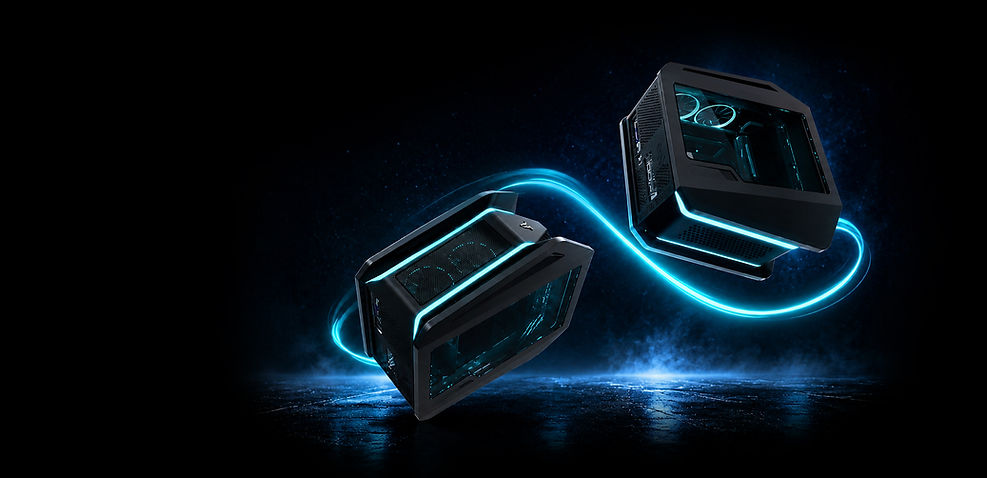
Interstellar 05 is an esports PC chassis design proposal inspired by the visual tension and mechanical presence of sci-fi starfighters. The design translates a sense of speed, combat readiness, and structural stability into a bold aluminum enclosure, using geometric cut lines, angled surfaces, and layered volumes to create a powerful yet refined silhouette.
Beyond styling, the project was developed through an industrial design workflow that included internal hardware layout study, component measurement, 3D modeling, structural adjustment, CMF planning, lighting integration, physical model making, and final prototype. Dual RGB light strips were integrated to enhance the gaming atmosphere while maintaining a clean, futuristic product identity.
The project explores how an esports chassis can move beyond aggressive decoration and become a more cohesive object—balancing performance-driven expression and a distinctive visual language.

Bronze Award
Thermaltake‘s Fantasy World Creation & Design Competition
Client
Graduated Project
Year
2018-2019
Designer
Joel Chang
Contribution
Concept Development
Industrial Design
Color, Material and Finish
Prototyping
Project Background
From Sci-Fi Revival to an Esports Chassis Concept
With the return of the Star Wars series to the big screen in 2015, sci-fi cinema once again sparked a global wave of excitement. It also reawakened my lasting memories of starships, futuristic technology, and cosmic battle scenes. This sci-fi atmosphere was not only visually powerful, but also carried a sense of speed, energy, and immersive experience.
At the same time, esports culture and gaming equipment were rapidly evolving. The PC was no longer just a tool for performance, but gradually became a visual centerpiece within a player’s desk setup. Therefore, this project began with sci-fi culture and esports scenarios as its foundation, exploring how to create a PC chassis specifically designed for gamers while responding to their emotional atmosphere and practical usage needs.

Designed for Esports Players
Starting from players’ usage scenarios and equipment needs, this project explores how a chassis can respond to performance, spatial configuration, and immersive atmosphere, rather than being treated purely as an exterior design exercise.

Star Wars: The Force Awakens
The return of this classic sci-fi series once again stimulated public imagination toward starships, cosmic battles, and futuristic technology. It also made sci-fi a meaningful design starting point capable of creating emotional resonance and a connection to memory.
User Insight
Beyond Appearance:
What Gamers Really Care About
With the target users defined as 18–35-year-old gamers, this project combined questionnaire research, competitor analysis, and personal usage experience to identify the core factors gamers value when choosing a PC chassis.
Beyond visual styling, a commercially meaningful esports chassis needs to respond to functional requirements, emotional resonation, cooling performance, and DIY flexibility.

Functionality
Survey feedback and competitor analysis revealed key needs in chassis size, hardware compatibility, I/O placement, dust prevention, and easy maintenance.

Sensory Experience
Lighting is not only decoration. Controlled RGB effects help shape immersion, personal identity, and the emotional atmosphere of a gaming setup.


DIY & Cooling
Gamers value stable cooling, clean cable routing, and flexible internal space for upgrades, component installation, and liquid-cooling support.

Ideation Exploration
Inspired by the Silhouette of the TIE Fighter
The ideation began with the iconic TIE Fighter from Star Wars, focusing on its symmetrical structure, central core, extended side wings, and strong directional presence. These features create a distinct sci-fi impression while suggesting speed, stability, and a sense of suspended motion.
Rather than directly replicating its appearance, the design extracts its proportion, silhouette, and visual balance, translating them into the chassis structure, side profile, and overall massing. By emphasizing a concentrated central volume, outward side proportions, and angled cut lines, the chassis presents a sense of forward motion even when standing still.
Many gaming PC cases in the market rely on complex lines, fragmented surfaces, and excessive decorative elements to express speed and technology. In this project, I aimed for a more restrained approach, using clean proportions, a recognizable silhouette, and balanced volumes to create a sci-fi design language without unnecessary visual complexity.
For me, a strong product form should first have a clear and memorable silhouette, rather than depending only on surface details. This became the core principle during the industrial design development stage.

Original Concept

Function First (Left)
Maximum space for hardware.
Trade-off: weaker design character.
Form First (Middle)
Closest to the original concept.
Trade-off: limited internal space.
Balanced Solution (Right)
Best balance between form and function.
Result: strong identity with practical feasibility.
From Concept to Reality
Balancing Visual Identity, Internal Space, and Feasibility
As the concept development moved toward a realistic product proposal, the design was no longer only about visual expression. It also had to respond to multiple hardware requirements, including the motherboard, graphics card, cooling modules, airflow structure, and assembly configuration. No matter how strong the form concept is, it cannot truly succeed if the exterior does not work with the internal architecture.
At this stage, I re-examined the proportions, volume, and internal space through multiple rounds of refinement to find the best balance. On one hand, the goal was to preserve the key silhouette and sci-fi character of the original concept as much as possible. On the other hand, the product also needed to achieve a reasonable structural layout, assembly feasibility, and practical user value. This process was not a compromise, but a way to translate the design intent into an achievable product language.


1:1 Space Validation
Built all the 1:1 hardware components to study and validate space, airflow, and assembly logic.
Design Outcome
Where Performance Meets Visual Identity
The final design integrates expandability, airflow, lighting, and interchangeable components into a cohesive chassis concept. Each feature was developed not only to improve usability and performance, but also to strengthen the product’s sci-fi gaming identity through controlled lighting, bold proportions, and a refined visual presence.




High Expandability
Supports 7 PCIe slots and graphics cards up to 400 mm in length.
Compatible with CPU tower coolers up to 195 mm tall.
Supports dual 240 mm radiator configurations.
Airflow Design
Optimized ventilation enhances overall heat dissipation and liquid-cooling performance.
Supports up to six 120 mm fans and includes a three-stage fan speed switch for flexible cooling control.
Easy to Carry
An integrated upper handle and lower grip recess make the chassis easier to lift, move, and carry with confidence.
Wraparound Light Strip
A continuous light strip flows from the top to the rear, creating a futuristic sci-fi gaming atmosphere.
RGB Lighting Control
Easily switch between preferred colors and lighting effects to personalize the system atmosphere.

Interchangeable Side Panels
Two quick-release side-panel styles are available, allowing users to switch between different visual configurations based on preference.
Prototype Validation
Hand-Built Full-Scale Prototype Validation
A design concept should not remain only as a digital presentation. It must be validated through a physical model to confirm its proportions, structure, hardware layout, and overall visual impact.
Using CNC acrylic, 3D-printed parts, and hands-on fabrication, I built a full-scale 1:1 validation prototype by hand. The model was assembled with actual hardware components, including the motherboard, graphics card, cooling modules, fans, and lighting system, to verify that the exterior design, internal space, and functional requirements could work together as a complete product.
This stage transformed the concept from visual exploration into a tangible product direction with greater feasibility.

Prototype Showcase
Final Form, Lighting, and Detail Design


Lifestyle Application
From Personal Setups to Esports Spaces

Personal Gaming Setup

Minimal Living Space

Professional Esports Venue

Final Product Key Visual

Space theme Visual

